
Niche construction in the biomanufacturing valley of death
The thing about the valley of death is you have to wander it


In 1894 Wilhelm Krüger, a German plant physiologist studying sugar production in Indonesia, wrote a paper introducing the world to new genus of microorganism he isolated from slime flux, the goo growing on sap exuding from trees. Prototheca were colorless, spherical cells that Krüger classified as a fungus, able to thrive in the high-sugar environment of the slime and grow heterotrophically in culture.
But in 1913, a Swiss algae expert noticed that the way that Prototheca reproduces looks much more like algae than it does like fungus. His report kicked off a taxonomic debate that raged for most of the 20th century. On one side, scientists claiming Prototheca for the family of algae containing Chlorella; on the other, those arguing that Prototheca looks more like a member of the Saccharomycetes. It wasn’t until 1973 that microscopic evidence of plastid organelles definitively proved that Prototheca was in fact an algae. Generations in the presence of abundant sugar had transformed the species into a colorless cousin, having lost its ability to photosynthesize.
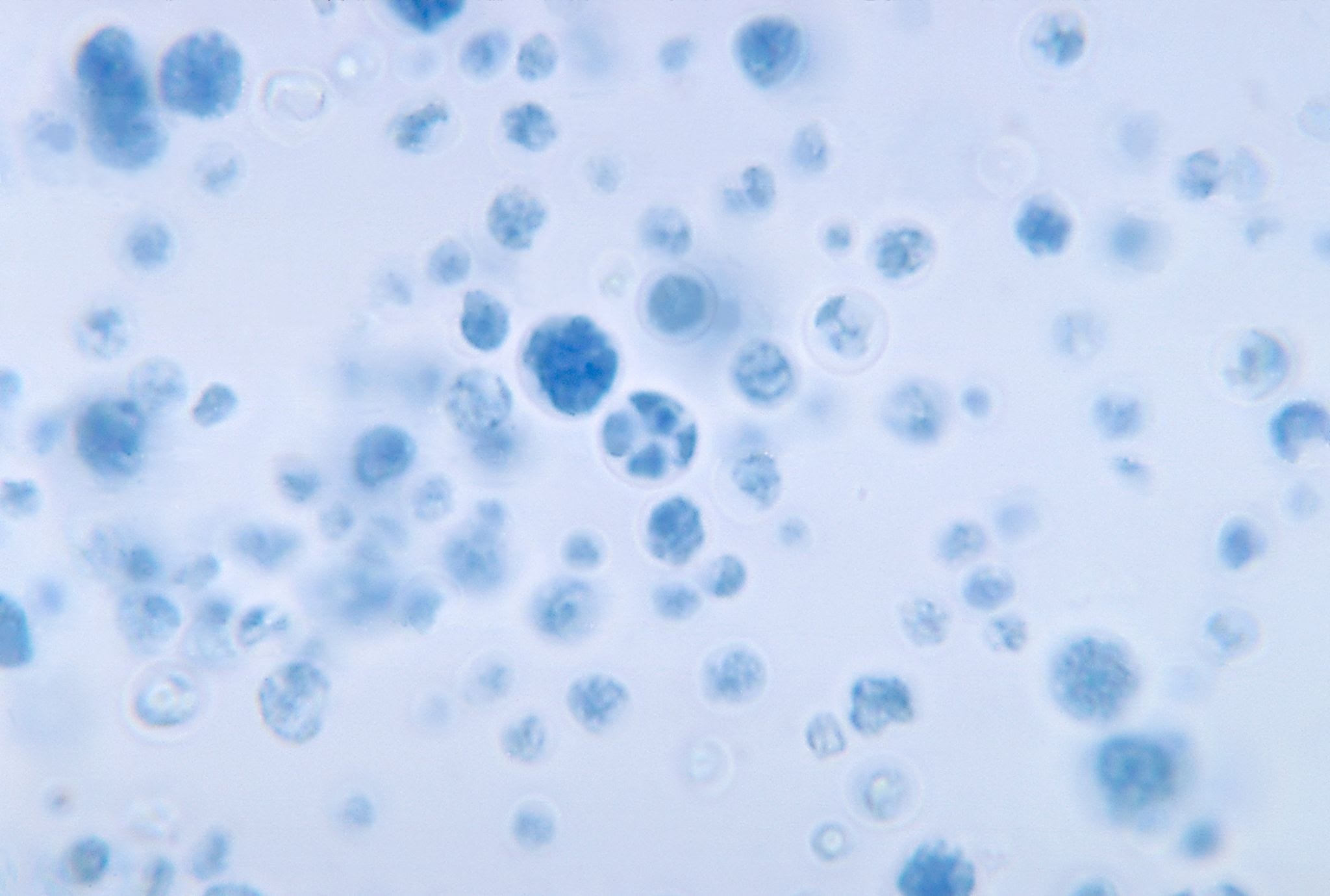
I’ve become a bit obsessed with Prototheca lately after I saw one of my favorite tiktok creators cooking with Algae Cooking Club’s new oil. Known for her performance art where she cooks elaborate dishes extremely from scratch while wearing couture gowns, Nara Smith recently partnered with Algae Cooking Club, developing her own flavored oils and sharing videos featuring different product lines. In her videos, she highlights how the low inflammatory profile, neutral taste, and high smoke point of the oil makes it perfect for her recipes.
This might seem like any other influencer partnership for a new brand trying to capture the anti-seed oil zeitgeist. But seeing algae oil featured in a video with over two million likes really blew my mind — was this the algae oil? The algae oil that was a defining story of the rise and fall of synthetic biology? This set me off on a journey to understand how Prototheca made it from Indonesian sugarcane fields to my For You page.

The last time I saw algae cooking oil in my social media feeds was around 2016, when TerraVia launched their food brand Thrive, featuring a line of cooking oils and algal flours. TerraVia itself was a rebrand for Solazyme, an early pioneer in synthetic biology and biofuels. Launched in 2003, Solazyme focused on engineering algae to produce biodiesel fuel. They quickly focused on heterotrophic strains like Prototheca that grew in steel tanks rather than difficult to manage open ponds or prohibitively expensive photobioreactors.

Geopolitical uncertainty, rising concern about climate instability, and rapidly improving abilities to read and write DNA contributed to large investment in biofuels. Donald Rumsfeld launched a task force to explore how to reduce US dependence on foreign petroleum, including large scale investment in biofuels for Naval fleets, alongside investment from VCs and large oil companies.
These sorts of efforts aimed for massive amounts of scaled fuel production by 2025. But with declining costs of oil and increasing US production, by 2012, congressional and military leaders were complaining about the relative cost of pilot scale biofuels vs. petroleum and biofuels companies were rapidly pivoting to higher value molecules.
Solazyme pursued a “side trip” into specialty oils for cosmetics and nutraceuticals, launching their Algenist brand in Sephora stores. In 2016, Solazyme rebranded to TerraVia, focusing on heart healthy cooking oils and sustainable algae flour. By 2017, they were bankrupt, their assets purchased by the Dutch food ingredient manufacturer Corbion.
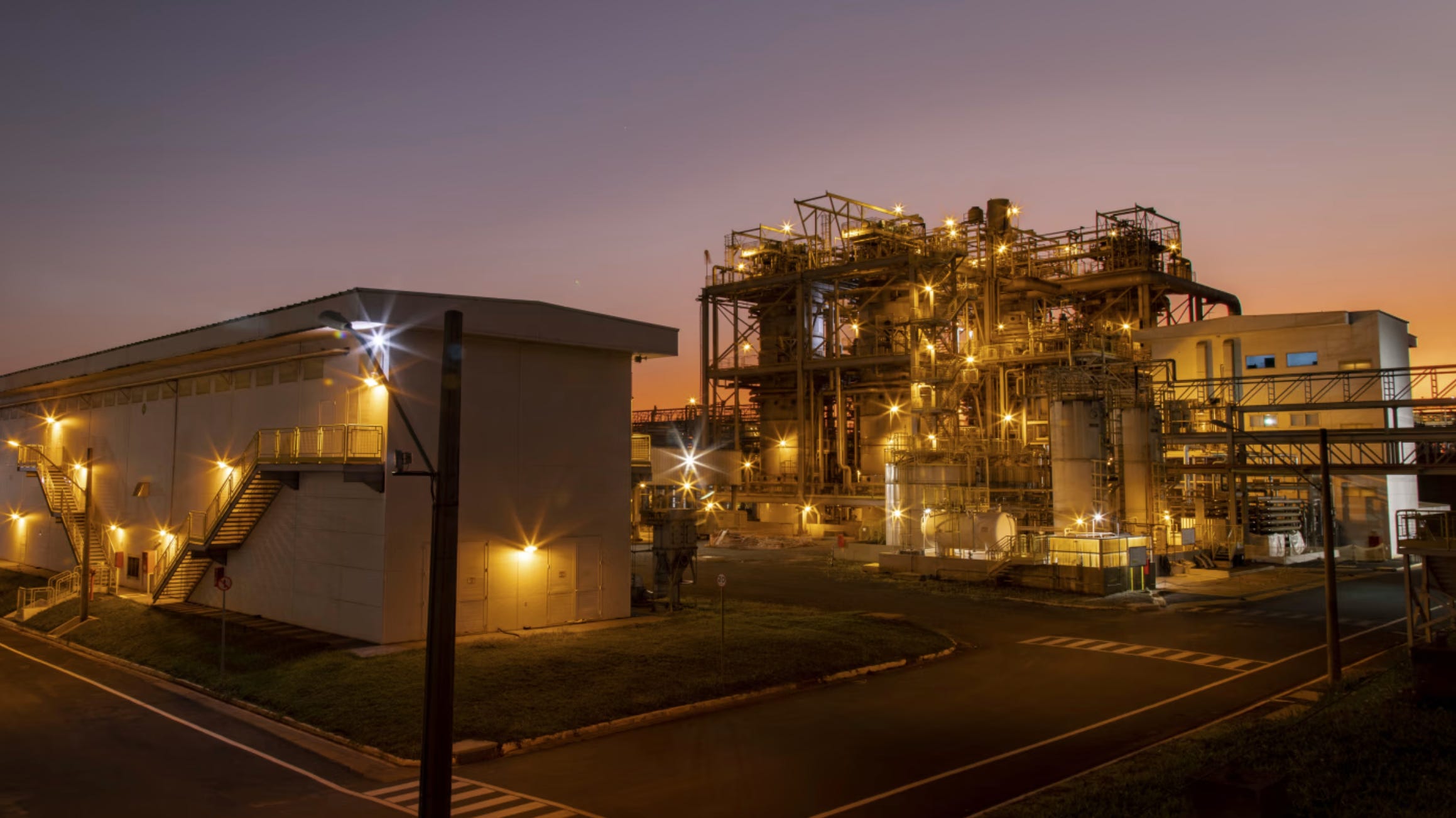
Algae Cooking Club launched in 2024, after being incubated by the New York based venture studio Squared Circles in collaboration with a Michelin-starred chef and with a strategic partnership with Checkerspot and manufacturing by Corbion in Brazil. Checkerspot was founded by former Solazyme leaders, who built their own Prototheca strains with the new biotech tools available and focusing from the start on niche materials markets where algae oil could be used in resins and coatings. They’ve recently focused their efforts on food ingredients.
At launch, Algae Cooking Club’s brand story focused on sustainability, but the message that is really resonating when I see algae oil in my social media feeds these days is about how great it is for cooking and how the molecular details of fatty acid chains and their sources matter in our health. This audience of hyper-aware wellness consumers doesn’t necessarily balk at seeing oil costing over $25 a bottle at niche grocery stores.
Like Prototheca itself, which transformed the sugary niche of sap flows into gooey slime flux and was itself transformed into a taxonomically peculiar heterotrophic algae, algae oil has found and constructed a niche for itself that has shaped it in turn, transforming over decades into something very different from what early researchers imagined it would be.
The failures of commodity bioproducts on their way from the lab to commercial reality are often understood as victims of the “valley of death,” unable to bridge the gap between research-scale funding and the commercial-scale resources needed to reach breakeven economies of scale. Government and philanthropic support in the early days launches visions of full-scale transformation of industrial landscapes. That enthusiasm wanes as steel has to go in the ground and supply agreements need to be negotiated while the costs of the new commodity are still orders of magnitude more expensive than the industrial scale processes they are meant to replace.
But the process from lab to market is never as linear as we hope that it is or imagine that itshould be. Even when the costs of a biomanufactured product are lower than existing products, the market dynamics don’t always go as predicted. The very first microbial oil to reach the market was gamma-linoleic acid produced by the fungus Mucor circinelloides in the late 1980s. High GLA oil was already on the market produced from seeds of the evening primrose and sold as a supplement for PMS relief. The microbial alternative was cheaper than squeezing evening primrose seeds, but when it launched it kicked off a price war between the plant and microbial oils, cutting into profits and eventually leading the manufacturers to close down microbial production entirely. (The process to produce the antimalarial medicine artemisinin in bioengineered yeasts faced a similar harsh market reality when it was commercialized more than a decade ago. After producing tons of yeast-derived artemisinin in the midst of a bumper crop and declining demand, Sanofi shut down production in 2015.)
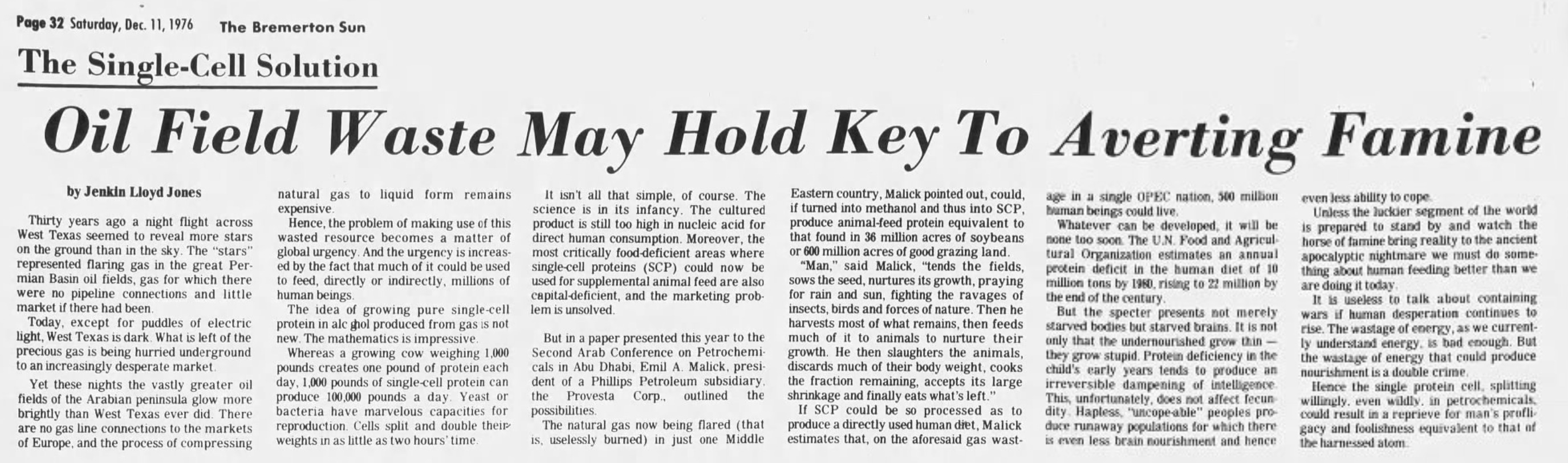
But bioproducts are more often envisioned as global scale commodities, replacing all transportation fuel, meat from animals, or even all agriculture itself. In the 1960s and 1970s, a growing population and an emerging “protein gap” sparked fear of widespread famine. People looked to microbes grown on low-cost carbon from petroleum byproducts as sources of cheap protein, while they explored strains like Prototheca and others for their production of nutritional oils and fats. Worried that mentioning bacteria and fungus would gross out consumers, these processes were termed “single cell” protein or oil. Despite the branding effort and their promise as the “key to averting famine,” the “marketing problem” as one article put it, remained unsolved.
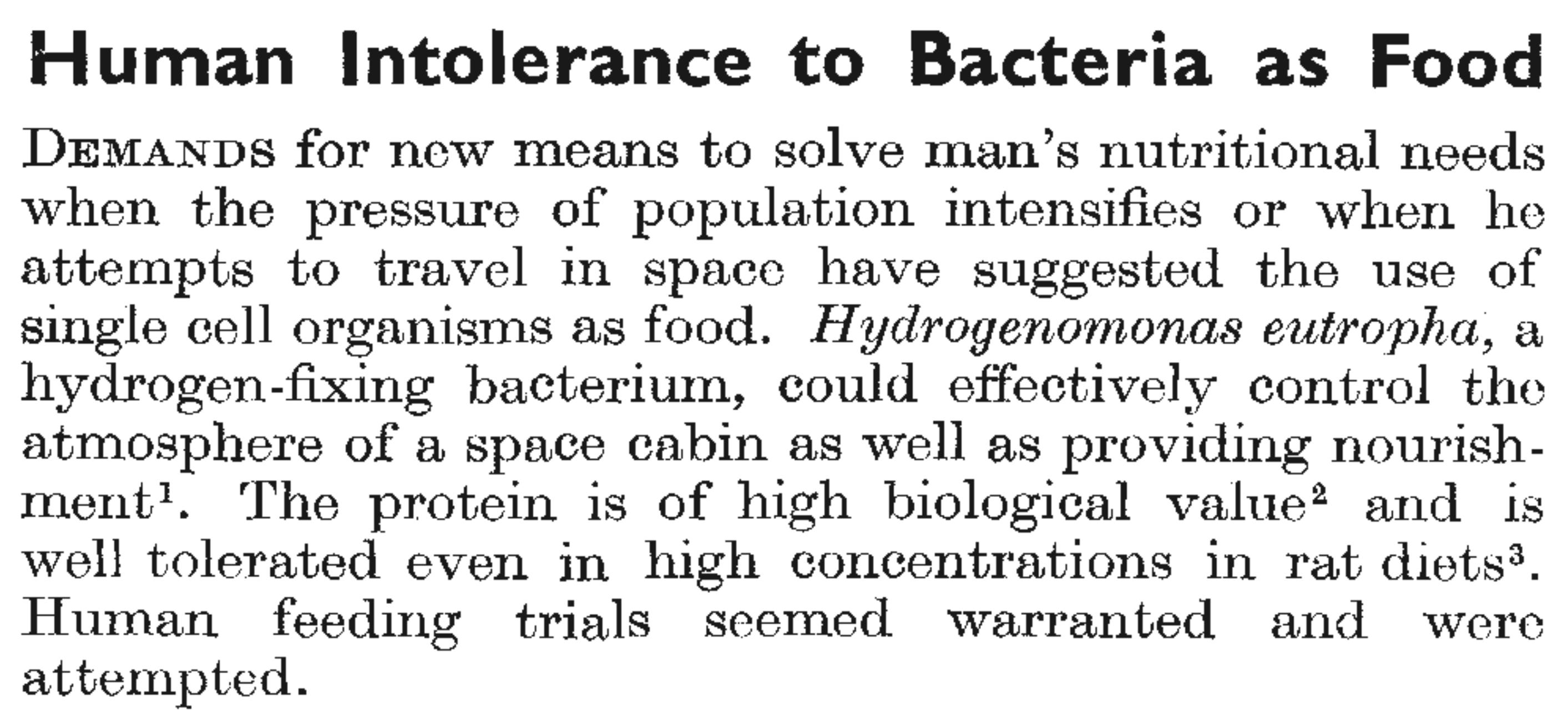
The “marketing problem” is the work it takes to transform a lab process for manufacturing a molecule and turn it into a product that people want at a price that they will pay for it, in a particular niche. It is not a linear process where money and science goes in one side and commercial scale manufacturing comes out the other. It is a complex web of trial and error, problem finding, failures, and transformations, where what emerges is almost never exactly what was originally imagined.
This is why the “valley of death” is such a pernicious meme for us as scientists and engineers who usually see the “marketing problem” as one of simply choosing the right words or packaging. The valley of death cannot be “bridged” with enough money or efficiency, the valley of death must be wandered. When we believe that our strain or pathway or manufacturing process will move smoothly to market, we never put in the transformative work it actually takes to find, build, and be changed by a niche. We’ll blame impatient investors or stupid consumers afraid of biotech, look for technical fixes to bioreactor design or AI to speed the design of enzymes, anything besides seeking to understand what makes a product worth buying, for a particular purpose, by a particular consumer. The “valley of death” becomes a self fulfilling prophecy.
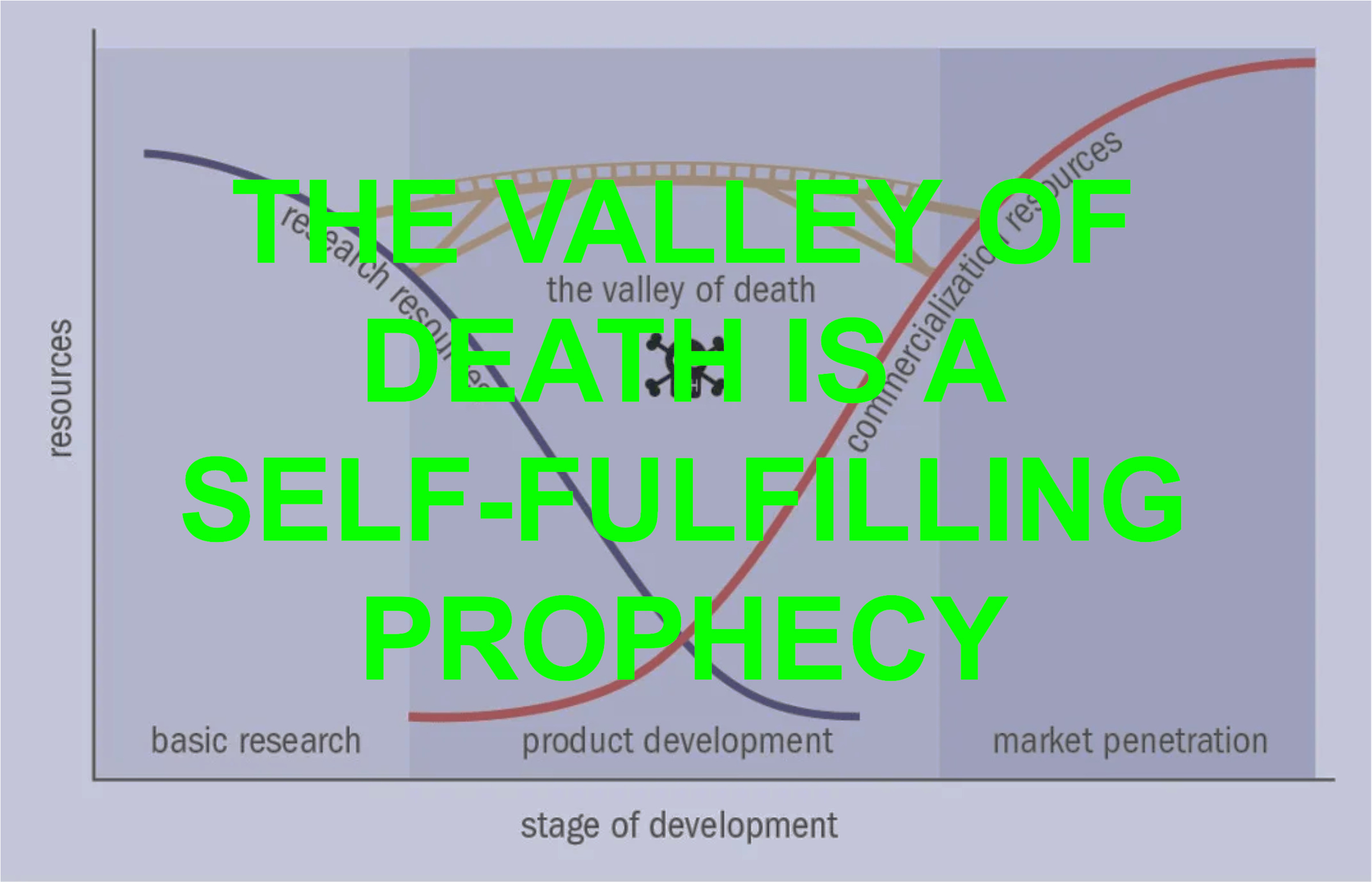
Prototheca biology began as applied science in 19th century sugarcane plantations and has made it through many transformations and branching paths to fancy kitchens and tiktok sponcon. Algae Cooking Club didn’t start trying to solve a global problem or commercialize a scientific finding, it started with a market trend of people hungry for different options of healthy oils that worked well in their kitchen. The science of Prototheca producing the oil is roughly the same, but the complete product and the landscape it is part of is radically different than what Wilhelm Krüger in 1894 or synthetic biologists in 2003 could imagine. Commercializing science isn’t about efficiencies that can force things along a linear path. To improve the efficiency of progress, we have to first see that there is no valley, and no straight lines, just an ecosystem waiting to be born.